
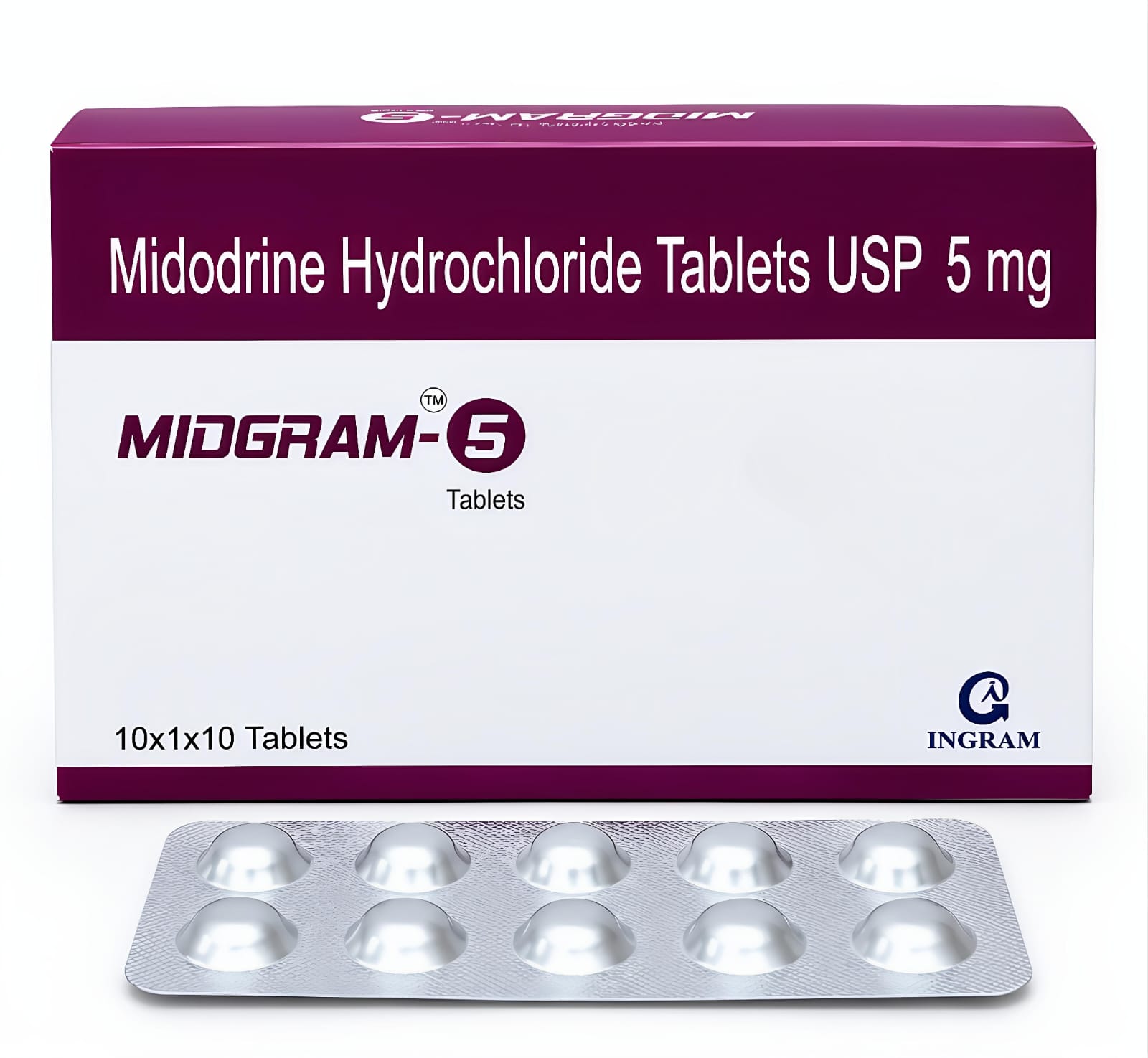
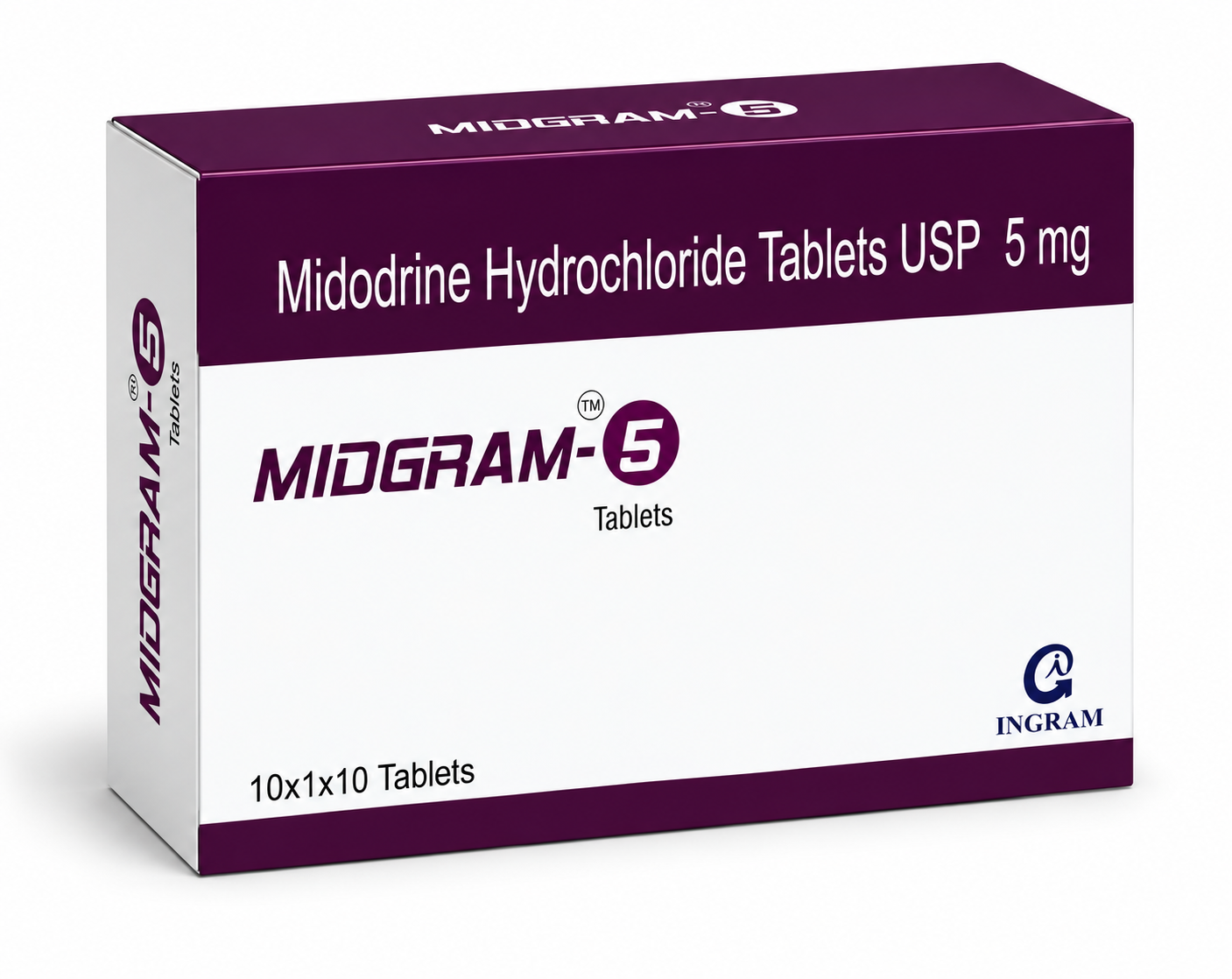
MIDGRAM 5 Tablet
Marketer
Ingram Biosciences Pvt Ltd
Salt Composition
Midodrine Hydrochloride 5 mg Tablets
Sale Price
Please confirm the latest price on company’s official phone numbers before placing an order.
Storage
Store in a cool, dry place below 25°C, away from direct sunlight and out of reach of children.
₹ 740.00
MIDGRAM 5
Midodrine Hydrochloride 5 mg Tablets
[INSERT APPROVED MIDGRAM 5 PRODUCT PACK IMAGE HERE]
Composition: Each tablet contains Midodrine Hydrochloride 5 mg
Dosage Form: Tablet
Route of Administration: Oral
Therapeutic Class: Vasopressor / Antihypotensive
Prescription Status: Prescription Medicine
About MIDGRAM 5
MIDGRAM 5 contains Midodrine Hydrochloride 5 mg, a vasopressor indicated for the treatment of symptomatic orthostatic hypotension in appropriately selected patients.
Midodrine is a prodrug that is converted in the body to its active metabolite, desglymidodrine. Desglymidodrine acts primarily on peripheral alpha-1 adrenergic receptors, producing vasoconstriction and increasing vascular tone. This results in an increase in peripheral vascular resistance and blood pressure. eMC
MIDGRAM 5 should be used under the supervision of a qualified healthcare professional following appropriate clinical evaluation.
What is Orthostatic Hypotension?
Orthostatic hypotension is a condition in which blood pressure decreases when a person moves from a sitting or lying position to an upright position.
Patients may experience symptoms such as:
- Dizziness or light-headedness on standing
- Weakness
- Blurred vision
- Feeling faint
- Near-fainting
- Fainting
Orthostatic hypotension may have different underlying causes. Appropriate medical evaluation should be undertaken to identify potentially reversible causes and determine whether pharmacological treatment is appropriate.
How MIDGRAM 5 Works
After oral administration, midodrine is converted to its active metabolite, desglymidodrine.
Desglymidodrine stimulates peripheral alpha-1 adrenergic receptors on vascular smooth muscle. This produces peripheral vasoconstriction, increases vascular tone and vascular resistance, and consequently increases blood pressure. It does not primarily act through cardiac beta-adrenergic receptors.
Mechanism
Midodrine → Desglymidodrine → Alpha-1 receptor stimulation → Peripheral vasoconstriction → Increased vascular tone → Increased blood pressure
Indication
MIDGRAM 5 is indicated for the treatment of symptomatic orthostatic hypotension when treatment with midodrine is considered appropriate by the treating physician.
The Indian regulatory record identifies midodrine hydrochloride tablets, including the 5 mg strength, for symptomatic orthostatic hypotension. CDSCO
Treatment should be continued only when clinically meaningful symptomatic benefit is obtained and should be regularly reviewed by the treating physician.
Dosage and Administration
The dose of midodrine should be individualized according to the patient's clinical response and blood-pressure measurements.
For commonly referenced midodrine 5 mg prescribing information, treatment may be initiated at 2.5 mg three times daily and gradually increased according to response. Doses may be increased up to 10 mg three times daily, which is a commonly referenced maintenance regimen. The maximum daily dose in the referenced SmPC is 30 mg in divided doses. eMC
MIDGRAM 5 provides 5 mg of Midodrine Hydrochloride per tablet and should be taken only in the dose prescribed by the treating physician.
Both standing and supine blood pressure should be monitored regularly, particularly during initiation and dose adjustment. eMC
Method of Administration
MIDGRAM 5 is intended for oral administration and should be taken with sufficient fluid.
Doses should generally be administered during the daytime when the patient is expected to be upright.
The last daily dose should generally be taken at least 4 hours before bedtime. Late-evening administration should be avoided because of the risk of supine hypertension. eMC
Patients should not increase, decrease or change the frequency of administration without medical advice.
Important Safety Information
Supine Hypertension
The most important safety concern associated with midodrine is supine hypertension, meaning elevated blood pressure while lying down.
Regular monitoring of supine and standing blood pressure is important during treatment. The potential for supine hypertension should be assessed at the beginning of therapy and during dose adjustment. eMC
Patients should promptly report symptoms that may indicate excessive blood pressure, including:
- Headache
- Palpitations
- Chest discomfort
- Shortness of breath
- Blurred vision
- Awareness of heartbeat
If clinically significant supine hypertension cannot be controlled by appropriate dose reduction, treatment should be stopped by the treating physician. eMC
Contraindications
MIDGRAM 5 should not be used in patients with contraindications to midodrine, including:
- Severe organic heart disease
- Hypertension
- Acute renal disease
- Severe renal impairment
- Urinary retention
- Serious prostate disorders, where specified
- Pheochromocytoma
- Hyperthyroidism or thyrotoxicosis
- Persistent and excessive supine hypertension
- Certain serious vascular disorders
- Proliferative diabetic retinopathy
- Narrow-angle glaucoma
- Known hypersensitivity to midodrine or any component of the formulation
The precise contraindications applicable to the marketed product should always be verified against the approved Indian prescribing information/package insert before publication. eMC
Warnings and Precautions
Particular caution is advised in patients with:
- Cardiovascular disease
- Bradycardia
- Renal impairment
- Hepatic impairment
- Urinary or prostatic disorders
- Atherosclerotic disease
- Autonomic nervous system disorders
- Diabetes mellitus with relevant autonomic or ocular complications
Blood pressure should be monitored during treatment, particularly during initiation and dose titration. Patients with severe autonomic dysfunction may require particularly careful assessment. eMC
Adverse Reactions
Possible adverse reactions reported with midodrine include:
- Supine hypertension
- Paraesthesia or tingling
- Headache
- Dizziness or light-headedness
- Piloerection or goosebumps
- Chills
- Pruritus, particularly of the scalp
- Skin rash
- Nausea
- Vomiting
- Dyspepsia
- Abdominal discomfort
- Bradycardia
- Tachycardia or palpitations
- Dysuria
- Urinary urgency
- Urinary retention
Patients should consult their healthcare professional if an adverse reaction is persistent, severe or concerning. eMC
Drug Interactions
Patients should inform their healthcare professional about all prescription medicines, over-the-counter medicines and other products they are taking.
Particular caution may be required when midodrine is administered with medicines that can:
- Increase blood pressure
- Cause vasoconstriction
- Affect alpha-adrenergic receptors
- Reduce heart rate
- Affect cardiac conduction
Blood pressure should be monitored carefully when midodrine is used with other vasoconstrictive agents. Caution is also advised with medicines that may reduce heart rate, including certain cardiac medicines. DailyMed
Pregnancy and Breastfeeding
There are limited clinical data regarding the use of midodrine during pregnancy. MIDGRAM 5 should be used during pregnancy only when considered necessary by the treating physician after an individual assessment of potential benefits and risks.
It is not established whether midodrine or its active metabolite is excreted into human breast milk. Breastfeeding patients should consult their healthcare professional before using MIDGRAM 5.
Use in Elderly Patients
Elderly patients may require careful dose selection and titration.
The physician should consider cardiovascular status, renal function, urinary function, blood-pressure response and concomitant medicines when determining the appropriate treatment regimen. eMC
Renal and Hepatic Impairment
Midodrine should be used with appropriate caution in patients with renal impairment. It is contraindicated in acute renal disease and severe renal impairment in referenced prescribing information. eMC
There are limited specific data in patients with hepatic impairment; treatment should therefore be individualized by the treating physician.
Paediatric Use
The safety and efficacy of midodrine in children have not been established. Therefore, MIDGRAM 5 should not be used in children unless specifically recommended and supervised by an appropriately qualified healthcare professional. eMC
Missed Dose
If a dose is missed, the patient should follow the instructions provided by the healthcare professional.
A double dose should not be taken to compensate for a missed dose. A missed dose should not be taken close to bedtime.
Overdose
An overdose may result in excessive elevation of blood pressure and may be associated with headache, bradycardia, piloerection, chills and urinary retention.
If an overdose is suspected, immediate medical attention should be sought.
Patient Counselling Information
Patients taking MIDGRAM 5 should be advised to:
- Take the medicine exactly as prescribed.
- Follow the prescribed dosing schedule.
- Have blood pressure monitored as recommended.
- Avoid taking the final dose close to bedtime.
- Inform their doctor about all medicines they are taking.
- Report symptoms suggestive of supine hypertension.
- Report difficulty passing urine or urinary retention.
- Not change the dose without medical advice.
Composition
Each tablet contains:
Midodrine Hydrochloride 5 mg
Excipients: q.s.
Storage
Store MIDGRAM 5 according to the storage conditions stated on the approved product packaging.
Keep the medicine in its original packaging and protect it from excessive heat, moisture and direct sunlight. Keep out of reach of children.
Do not use the product after the expiry date printed on the packaging.
Important Medical Disclaimer
MIDGRAM 5 is a prescription medicine.
The information provided on this website is intended for general educational and product-information purposes and is not a substitute for professional medical advice, diagnosis or treatment.
MIDGRAM 5 should be used only under the supervision of a qualified healthcare professional.
The information presented on this page should be read together with the approved prescribing information/package insert supplied with the product.
For Healthcare Professionals: Please refer to the approved prescribing information before prescribing MIDGRAM 5.
For Patients: Do not self-medicate or change the prescribed dose. Consult your doctor or pharmacist for advice regarding the appropriate use of MIDGRAM 5.
Disclaimer: The information provided on this website by Ingram Biosciences Private Limited is for general informational and educational purposes only and is not a substitute for professional medical advice, diagnosis, or treatment. All medicines should be used strictly as per the advice of a qualified healthcare professional and applicable prescribing information. Product information is subject to change in accordance with applicable regulatory requirements. The Company endeavours to ensure accuracy but does not warrant that all information is complete or error-free. To the extent permitted by applicable law, the Company shall not be liable for any loss arising from misuse or unauthorised reliance on website information. Nothing in this disclaimer excludes any liability or rights that cannot legally be excluded or limited under applicable Indian law. For medical advice or product-related concerns, please consult a qualified healthcare professional or contact the Company through its official channels.



Disclaimer :- The information provided on this site is for informational purposes only and is not intended as a substitute for advice from your physician or other health care professional and any information contained on or in any product label or packaging and is not intended to diagnose, treat, cure or prevent any disease or disorder. You should consult with a healthcare professional before starting any diet, exercise or nutritional supplement program, before taking any medication, or if you have or suspect you might have a health problem.