
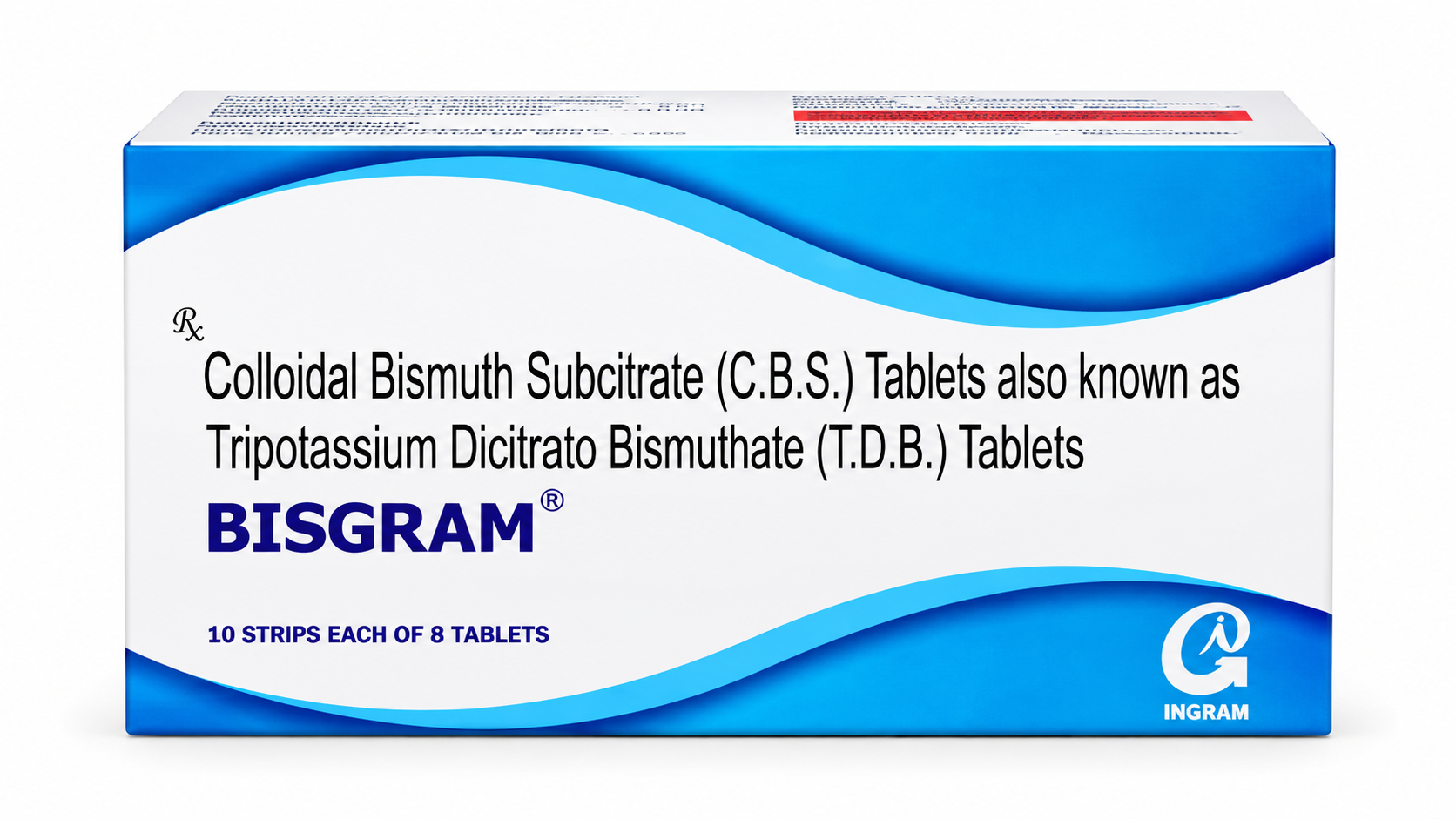
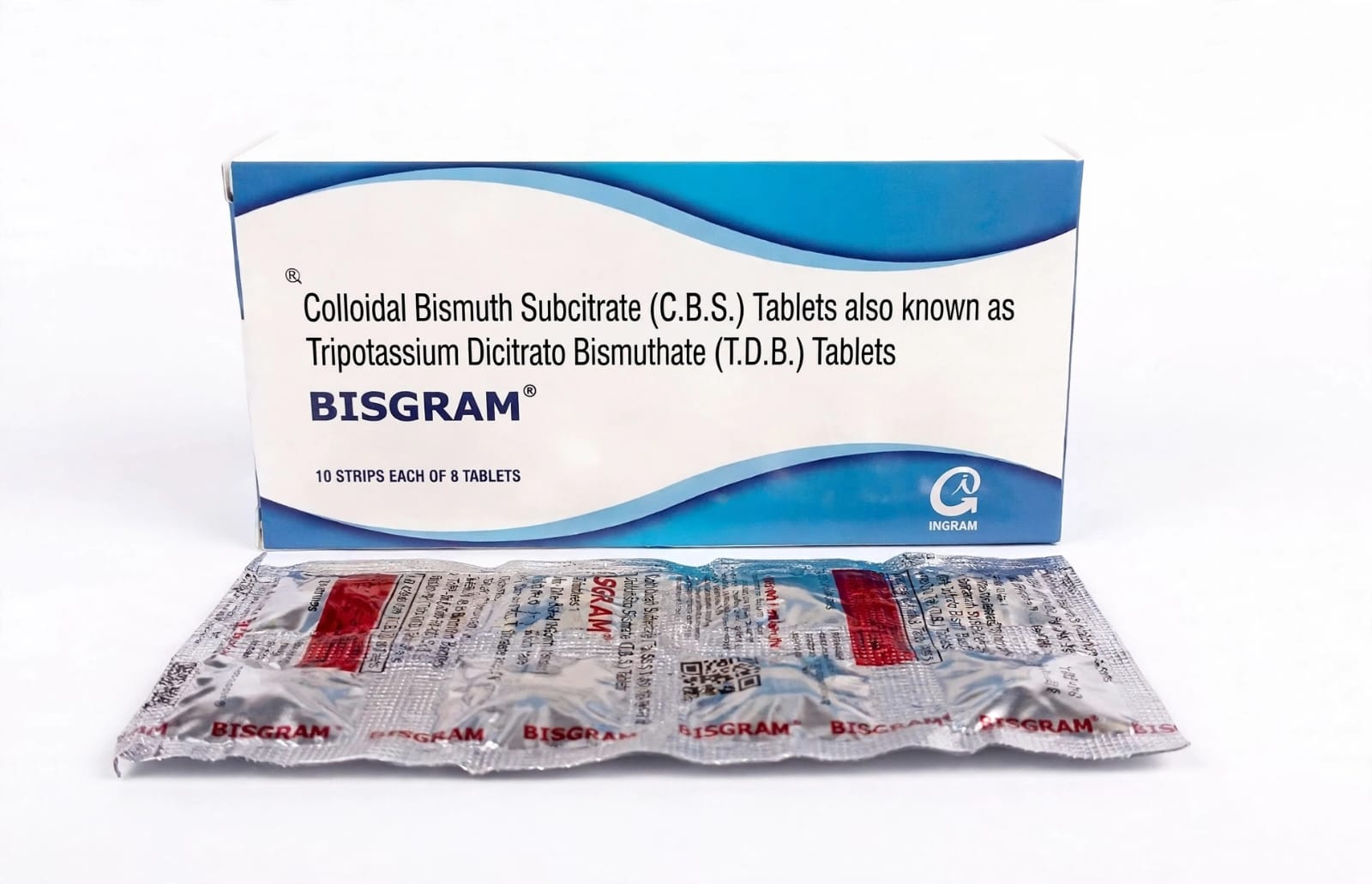
Bisgram Tablet
Marketer
Ingram Biosciences Pvt Ltd
Salt Composition
Bismuth Subcitrate 120 mg (Colloidal Bismuth Subcitrate)
Storage
Store in a cool, dry place below 25°C, away from direct sunlight and out of reach of children.
Original price was: ₹ 230.00.₹ 195.50Current price is: ₹ 195.50.
What is Bisgram Tablet?
Bisgram Tablet is a gastrointestinal medicine that contains Bismuth Subcitrate 120 mg, a bismuth‑based anti‑ulcer agent. Doctors use Bisgram Tablet to help protect the stomach and duodenal lining, treat peptic ulcers and support eradication regimens for Helicobacter pylori (H. pylori) infection when combined with other drugs.
Bismuth Subcitrate 120 mg works locally in the gut by coating ulcerated areas, reducing irritation from acid and digestive enzymes, and exerting mild antimicrobial activity against H. pylori. This targeted action makes Bisgram Tablet a useful option in comprehensive ulcer and gastritis management under medical supervision.
Key Benefits Bisgram Tablet (Bismuth Subcitrate 120 mg)
Helps protect the stomach and duodenal mucosa by forming a protective layer over ulcer sites, promoting healing.
Supports H. pylori eradication regimens when used with appropriate antibiotics and acid‑reducing medicines, thereby lowering the risk of ulcer recurrence.
Reduces symptoms such as upper abdominal pain, burning, indigestion and discomfort associated with peptic ulcer disease and gastritis.
Uses & Indications Bisgram Tablet
Doctors may prescribe Bisgram Tablet containing Bismuth Subcitrate 120 mg for:
Treatment of gastric and duodenal ulcers, including ulcers linked with H. pylori infection, as part of combination therapy.
Symptomatic management of gastritis, dyspepsia and acid‑related upper gastrointestinal discomfort, under evaluation and guidance.
The tablet should only be used after a healthcare professional evaluates alarm features such as weight loss, bleeding, anaemia or recurrent vomiting.
Dosage & Directions Bisgram Tablet
The exact dose and duration must follow the treating physician’s advice and the regimen being used. Typical adult directions for Bismuth Subcitrate 120 mg include:
One Bisgram Tablet two to four times daily, often taken before meals and at bedtime, as part of an ulcer or H. pylori regimen.
Swallow the tablet with water; avoid crushing or chewing unless your doctor suggests otherwise.
Complete the full treatment course even if symptoms improve earlier, to reduce the risk of relapse or resistant infection. Do not exceed the prescribed daily dose, and do not use Bisgram Tablet for prolonged periods without medical review.
Price & Packaging Bisgram Tablet
Brand name: Bisgram Tablet.
Molecular name: Bismuth Subcitrate 120 mg (often labelled as Colloidal Bismuth Subcitrate 120 mg).
Pack size: Commonly supplied as strips of 8 tablets, with multiple strips per box for clinics and pharmacies.
Indicative pricing: Listings show MRPs around ₹180–₹220 per strip, with patient prices varying by retailer, offers and taxes.
Check the MRP, batch number, manufacturing date and expiry date before purchase and dispensing.
Side Effects & Safety Bisgram Tablet
Most people tolerate Bismuth Subcitrate 120 mg well when used for the recommended duration. Possible side effects include:
Darkening of stool or tongue due to bismuth, which is usually harmless and reversible after stopping therapy.
Mild nausea, constipation, diarrhoea or abdominal discomfort.
Very high or prolonged doses can lead to bismuth accumulation and neurological symptoms, so long‑term self‑medication is not advised. Any allergic reaction, persistent stomach pain, or signs of bleeding such as black tarry stools or vomiting blood require urgent medical attention.
Precautions & Contraindications Bisgram Tablet
Do not use Bisgram Tablet if you are allergic to bismuth compounds, aspirin‑like medicines or any ingredient in the formulation.
Avoid in patients with severe kidney impairment, because bismuth clearance may be reduced and toxicity risk increased.
Use caution in people taking other salicylates, anticoagulants or nephrotoxic drugs; inform your doctor about all medications and supplements.
Safety in pregnancy and breastfeeding should be assessed case‑by‑case; many guidelines recommend alternative options unless the potential benefit clearly outweighs risk.
Bisgram Tablet is not meant for children unless a specialist recommends it for specific indications.
Patients should also follow lifestyle measures such as avoiding smoking, excessive alcohol, very spicy or acidic foods and overuse of NSAIDs that can worsen ulcers.
Frequently Asked Questions (FAQ)
1. What is Bisgram Tablet used for?
Bisgram Tablet with Bismuth Subcitrate 120 mg is used to treat gastric and duodenal ulcers and to support H. pylori eradication regimens, as well as to relieve gastritis‑related indigestion.
2. How does Bismuth Subcitrate 120 mg work?
It coats ulcer and inflamed areas, protects them from stomach acid and pepsin, and shows mild antibacterial activity against H. pylori, promoting healing and reducing recurrence.
3. Can Bisgram Tablet be taken alone for H. pylori infection?
No, H. pylori therapy typically combines bismuth with antibiotics and acid‑suppressing drugs; your doctor will select the full regimen.
4. How long should I take Bisgram Tablet?
Typical H. pylori or ulcer regimens last 10–14 days, though your doctor may adjust duration based on response and guidelines.
5. Why has my stool turned black while on Bisgram?
Black or dark stools can occur because bismuth forms compounds with sulphur in the gut; this is usually harmless, but if you suspect bleeding or feel unwell, seek medical advice.
6. Can I take antacids or PPIs with Bisgram Tablet?
In many ulcer regimens, Bisgram is combined with proton‑pump inhibitors (PPIs), but timing and combinations should follow a doctor’s plan.
7. Is Bisgram Tablet safe for long‑term daily use?
Long‑term unsupervised use is not recommended, as prolonged high bismuth exposure can cause toxicity; therapy should be time‑limited and monitored.
8. Can Bisgram Tablet interact with other medicines?
Yes, it can interfere with absorption of some antibiotics, iron and other drugs; it should be spaced from or carefully coordinated with these agents.
9. What should I do if I miss a dose?
Take the missed dose when you remember unless it is almost time for the next dose; never double up doses.
10. Can Bisgram Tablet be used for simple acidity or heartburn?
It may help some dyspepsia symptoms, but frequent heartburn needs evaluation to rule out serious disease and to choose the most appropriate therapy.
Quick Tips
Take Bisgram Tablet at evenly spaced times each day, preferably before meals and at bedtime, for consistent ulcer protection.
Avoid alcohol, smoking and unnecessary NSAID use while on therapy, as these can delay healing.
Do not self‑medicate for long periods; if symptoms persist beyond a few weeks or recur frequently, seek endoscopic or specialist evaluation.
Why Choose Ingram BioSciences?
Bisgram Tablet is part of Ingram BioSciences’ specialised gastro‑hepato care portfolio, alongside products like Pepto Bisgram 262 mg Softgel, Eldgram 50, OBGRAM and PepGram. Ingram works with WHO‑GMP–aligned manufacturing partners and provides clear educational content, disclaimers and product labelling that support safe clinical use.
This focus on digestive health and quality manufacturing helps position Bisgram Tablet as a trusted Bismuth Subcitrate 120 mg option for ulcer and gastritis management.
Customer Support & Ordering
For medical information, trade enquiries or product availability related to Bisgram Tablet:
Manufacturer/Marketer: Ingram Biosciences Pvt Ltd.
Address: Office‑308, 3rd Floor, Living Style Mall, Jasola, New Delhi‑110025, India.
Phone / Mobile: +91 76690 11534.
Email: info@ingrambiosciences.in
Bisgram Tablet (Bismuth Subcitrate 120 mg) is available via hospitals, local chemists and trusted online pharmacies; it should always be used on the advice and prescription of a registered medical practitioner.
Related products
-
Sale!

VASULIP 10 Tablet
Original price was: ₹ 175.00.₹ 148.75Current price is: ₹ 148.75. -
Sale!
OBGRAM-ER 300 Tablet
Original price was: ₹ 300.00.₹ 299.00Current price is: ₹ 299.00. -
Sale!
INGCAL Tablet
Original price was: ₹ 195.00.₹ 165.75Current price is: ₹ 165.75. -
Sale!
OBGRAM 40 Tablet
Original price was: ₹ 175.00.₹ 148.75Current price is: ₹ 148.75.

Disclaimer :- The information provided on this site is for informational purposes only and is not intended as a substitute for advice from your physician or other health care professional and any information contained on or in any product label or packaging and is not intended to diagnose, treat, cure or prevent any disease or disorder. You should consult with a healthcare professional before starting any diet, exercise or nutritional supplement program, before taking any medication, or if you have or suspect you might have a health problem.