

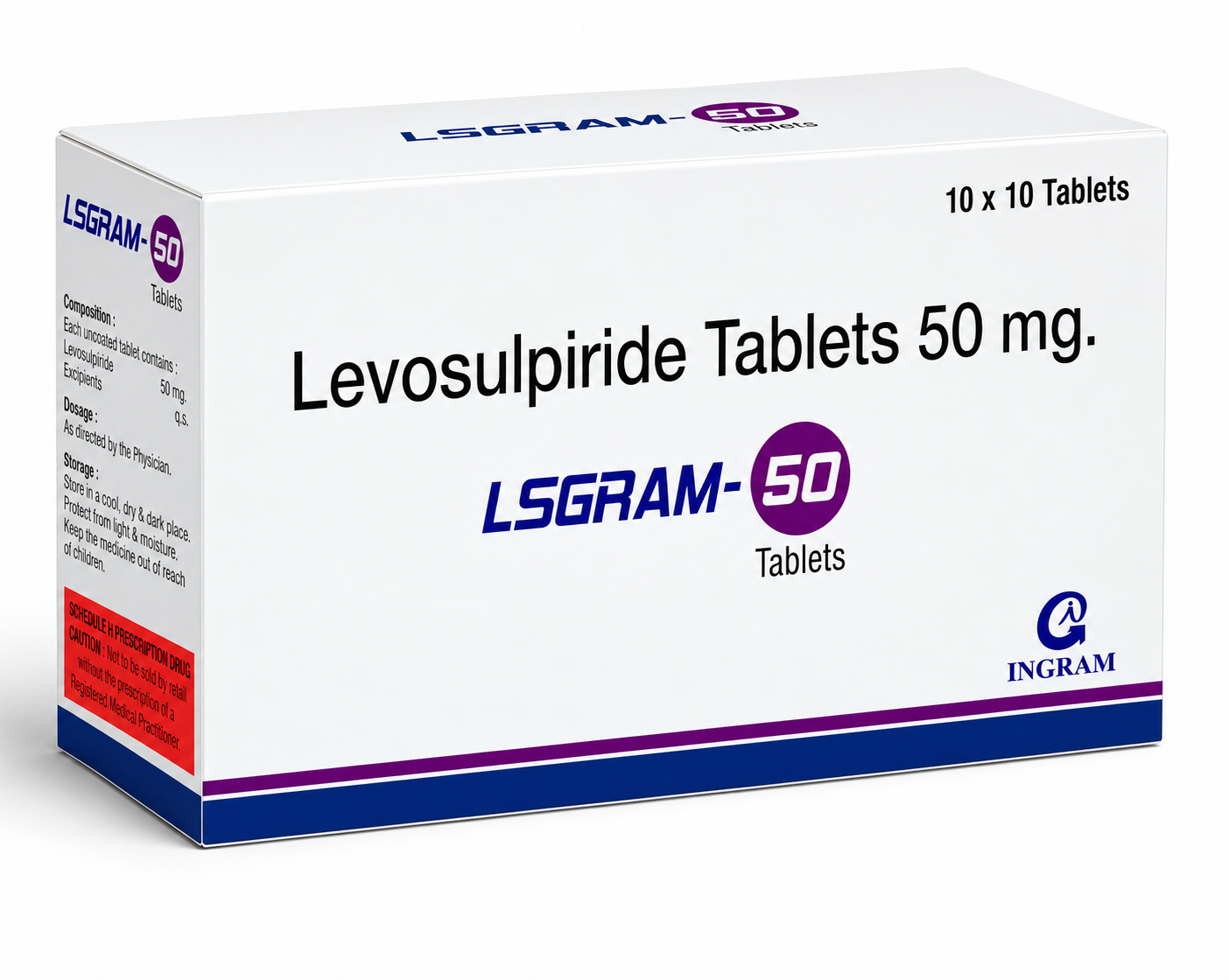
LSGRAM 50 Tablet
Marketer
Ingram Biosciences Pvt Ltd
Salt Composition
Levosulpiride 50 mg Tablets
Sale Price
Please confirm the latest price on company’s official phone numbers before placing an order.
Storage
Store in a cool, dry place below 25°C, away from direct sunlight and out of reach of children.
₹ 170.00
LSGRAM-50 Tablets
Levosulpiride 50 mg Tablets
LSGRAM-50 contains Levosulpiride 50 mg, a substituted benzamide derivative with gastroprokinetic and antiemetic properties. It is used under medical supervision in the management of selected gastrointestinal disorders associated with impaired gastrointestinal motility, including functional dyspeptic symptoms, nausea and vomiting, and delayed gastric emptying. Levosulpiride has been recognized in Indian regulatory approvals for gastrointestinal conditions including functional dyspepsia, nausea, vomiting and diabetic gastroparesis. CDSCO
Composition
Each uncoated tablet contains:
- Levosulpiride IP — 50 mg
- Excipients — q.s.
Dosage form: Uncoated tablet
Route of administration: Oral
About LSGRAM-50
LSGRAM-50 is designed to support gastrointestinal motility in patients for whom a prokinetic medicine is considered appropriate by the treating physician.
Levosulpiride acts primarily by modulating dopamine D2 receptors and can enhance coordinated gastrointestinal motor activity. By improving gastric and upper gastrointestinal motility, it may help reduce symptoms associated with delayed gastric emptying and functional gastrointestinal dysmotility.
The medicine should be used only according to the indication, dose and duration prescribed by a qualified healthcare professional.
Indications
LSGRAM-50 may be prescribed for selected gastrointestinal conditions such as:
- Functional dyspepsia
- Symptoms associated with delayed gastric emptying
- Diabetic gastroparesis
- Nausea and vomiting associated with gastrointestinal motility disturbances
- Other gastrointestinal motility disorders where a prokinetic agent is considered appropriate
The exact indication and duration of treatment should be determined by the treating physician based on the patient's clinical condition.
How LSGRAM-50 Works
Levosulpiride is a dopamine D2-receptor antagonist with predominantly peripheral activity at therapeutic doses. Dopamine can inhibit gastrointestinal motor activity and influence gastrointestinal coordination. By blocking D2 receptors, levosulpiride can facilitate gastrointestinal motor function.
Its prokinetic action may improve gastric emptying and promote coordinated movement of gastrointestinal contents. This can be useful in patients whose symptoms are associated with impaired gastric or upper gastrointestinal motility.
Levosulpiride may therefore help address symptoms such as post-meal fullness, early satiety, bloating, nausea and discomfort when these symptoms are related to an underlying gastrointestinal motility disturbance.
Benefits and Therapeutic Role
When prescribed appropriately, LSGRAM-50 may help:
- Improve gastrointestinal motility
- Facilitate gastric emptying
- Reduce symptoms associated with delayed gastric emptying
- Relieve functional dyspeptic symptoms in appropriate patients
- Reduce nausea and vomiting associated with gastrointestinal dysmotility
- Improve post-meal fullness and related upper gastrointestinal discomfort
The response to treatment can vary between patients. LSGRAM-50 should not be used simply to treat unexplained abdominal symptoms without appropriate medical evaluation.
Dosage and Administration
The dose and duration of LSGRAM-50 should be decided by the treating physician according to the patient's age, diagnosis, clinical response and other medicines being taken.
The tablet should be swallowed whole with water. It should not be chewed or crushed unless specifically advised by a healthcare professional.
Patients should follow the prescribed dosing schedule and should not take more than the recommended dose.
If a dose is missed, it should generally be taken when remembered unless it is almost time for the next scheduled dose. Patients should not take a double dose to compensate for a missed dose.
Possible Side Effects
Like other medicines, levosulpiride may cause adverse effects in some individuals.
Possible side effects may include:
- Headache
- Dizziness
- Drowsiness or sleepiness
- Restlessness or agitation
- Gastrointestinal discomfort
- Changes in bowel habits
- Fatigue
- Increased prolactin levels
- Breast tenderness or enlargement
- Menstrual disturbances
- Milk secretion unrelated to breastfeeding
- Sexual or reproductive hormonal disturbances
Rarely, movement-related symptoms such as tremor, rigidity, abnormal involuntary movements or other extrapyramidal symptoms may occur.
Patients experiencing unusual movements, marked restlessness, severe dizziness, fainting or other concerning symptoms should seek medical attention promptly.
Precautions
LSGRAM-50 should be used with caution in patients with:
- A history of movement disorders or extrapyramidal reactions
- Conditions associated with elevated prolactin
- Epilepsy or seizure disorders
- Significant renal impairment
- Cardiovascular disease or risk factors for cardiac rhythm abnormalities
- Other neurological or psychiatric conditions
The physician should be informed about all prescription medicines, over-the-counter medicines and supplements being used.
Patients should avoid self-medication and prolonged use without medical supervision.
Contraindications
Levosulpiride should generally be avoided in patients with known hypersensitivity to levosulpiride or related compounds or any component of the formulation.
It may also be unsuitable in certain conditions such as gastrointestinal obstruction, gastrointestinal bleeding or perforation, where stimulation of gastrointestinal motility could be inappropriate.
Because levosulpiride can increase prolactin levels, it should be used carefully in patients with prolactin-dependent disorders.
The prescribing physician should evaluate the patient's medical history before initiating treatment.
Pregnancy and Breastfeeding
LSGRAM-50 should be used during pregnancy only when specifically prescribed by a healthcare professional after consideration of the expected benefits and potential risks.
Patients who are pregnant, planning pregnancy or breastfeeding should inform their doctor before taking levosulpiride.
Because levosulpiride may influence prolactin secretion, appropriate medical advice is particularly important during breastfeeding.
Use in Children
LSGRAM-50 is a 50 mg strength intended for use according to medical prescription. The suitability of levosulpiride for children and adolescents depends on the specific clinical situation, formulation and applicable prescribing information.
It should not be administered to children without medical advice.
Drug Interactions
Patients should inform their physician about all medicines they are taking.
Particular attention may be required when levosulpiride is used with medicines that:
- Affect dopamine pathways
- Produce sedative or central nervous system effects
- May influence cardiac rhythm
- Affect gastrointestinal motility
- Alter prolactin levels
A healthcare professional should review concomitant medicines before treatment, particularly in patients receiving multiple medicines.
When to Seek Medical Advice
Medical attention should be sought if symptoms are severe, persistent or associated with:
- Severe or worsening abdominal pain
- Persistent vomiting
- Blood in vomit or stool
- Unexplained weight loss
- Difficulty swallowing
- Fainting or severe dizziness
- New abnormal or involuntary movements
- Severe restlessness or confusion
- Any suspected allergic reaction
Persistent dyspeptic or gastrointestinal symptoms should be medically evaluated rather than managed continuously with self-medication.
Frequently Asked Questions
What is LSGRAM-50 used for?
LSGRAM-50 contains levosulpiride 50 mg and is used under medical supervision for selected gastrointestinal motility disorders, including functional dyspeptic symptoms and delayed gastric emptying.
Does LSGRAM-50 improve gastric motility?
Yes. Levosulpiride has prokinetic activity and may improve gastrointestinal motor function and gastric emptying in appropriate patients.
Can LSGRAM-50 be taken for acidity?
LSGRAM-50 is not primarily an acid-suppressing medicine. It is a prokinetic medicine. In some patients with upper gastrointestinal symptoms, a physician may prescribe it as part of an overall treatment regimen depending on the underlying cause.
Can LSGRAM-50 be taken after meals?
The timing of levosulpiride administration should follow the prescribing physician's instructions and the product-specific prescribing information. Do not change the timing or dose without medical advice.
Is LSGRAM-50 suitable for long-term use?
The duration of treatment depends on the underlying condition and clinical response. Long-term use should only be continued under appropriate medical supervision.
Storage
Store LSGRAM-50 in a cool, dry and dark place, protected from light.
- Keep out of reach of children.
- Keep the tablets in their original packaging.
- Do not use the medicine after the expiry date.
- Do not use tablets if the packaging is damaged or the product shows visible deterioration.
Important Safety Information
LSGRAM-50 is a prescription medicine and should be used only under the supervision of a qualified healthcare professional. The information provided on this website is intended for general educational purposes and should not replace professional medical advice, diagnosis or treatment.
The appropriate dose, duration and suitability of levosulpiride vary according to the individual patient's condition. Patients should not start, stop or modify treatment without consulting their physician.
Product Information
Brand: LSGRAM-50
Generic: Levosulpiride
Strength: 50 mg
Dosage Form: Uncoated Tablets
Route: Oral
Category: Gastrointestinal Prokinetic Agent
Pack: As marketed
Composition: Each uncoated tablet contains Levosulpiride 50 mg and excipients q.s.
Disclaimer: This website information is intended for healthcare and educational reference and does not constitute medical advice. LSGRAM-50 should be dispensed and used only on the advice of a registered medical practitioner. Product indications, dosage and prescribing information should always be verified against the currently approved prescribing information applicable to the product.
Disclaimer: The information provided on this website by Ingram Biosciences Private Limited is for general informational and educational purposes only and is not a substitute for professional medical advice, diagnosis, or treatment. All medicines should be used strictly as per the advice of a qualified healthcare professional and applicable prescribing information. Product information is subject to change in accordance with applicable regulatory requirements. The Company endeavours to ensure accuracy but does not warrant that all information is complete or error-free. To the extent permitted by applicable law, the Company shall not be liable for any loss arising from misuse or unauthorised reliance on website information. Nothing in this disclaimer excludes any liability or rights that cannot legally be excluded or limited under applicable Indian law. For medical advice or product-related concerns, please consult a qualified healthcare professional or contact the Company through its official channels.



Disclaimer :- The information provided on this site is for informational purposes only and is not intended as a substitute for advice from your physician or other health care professional and any information contained on or in any product label or packaging and is not intended to diagnose, treat, cure or prevent any disease or disorder. You should consult with a healthcare professional before starting any diet, exercise or nutritional supplement program, before taking any medication, or if you have or suspect you might have a health problem.